

There’s an old market saying: amateurs open the market and professionals close it. And the last couple sessions have been a clean demo of why that idea still holds up.
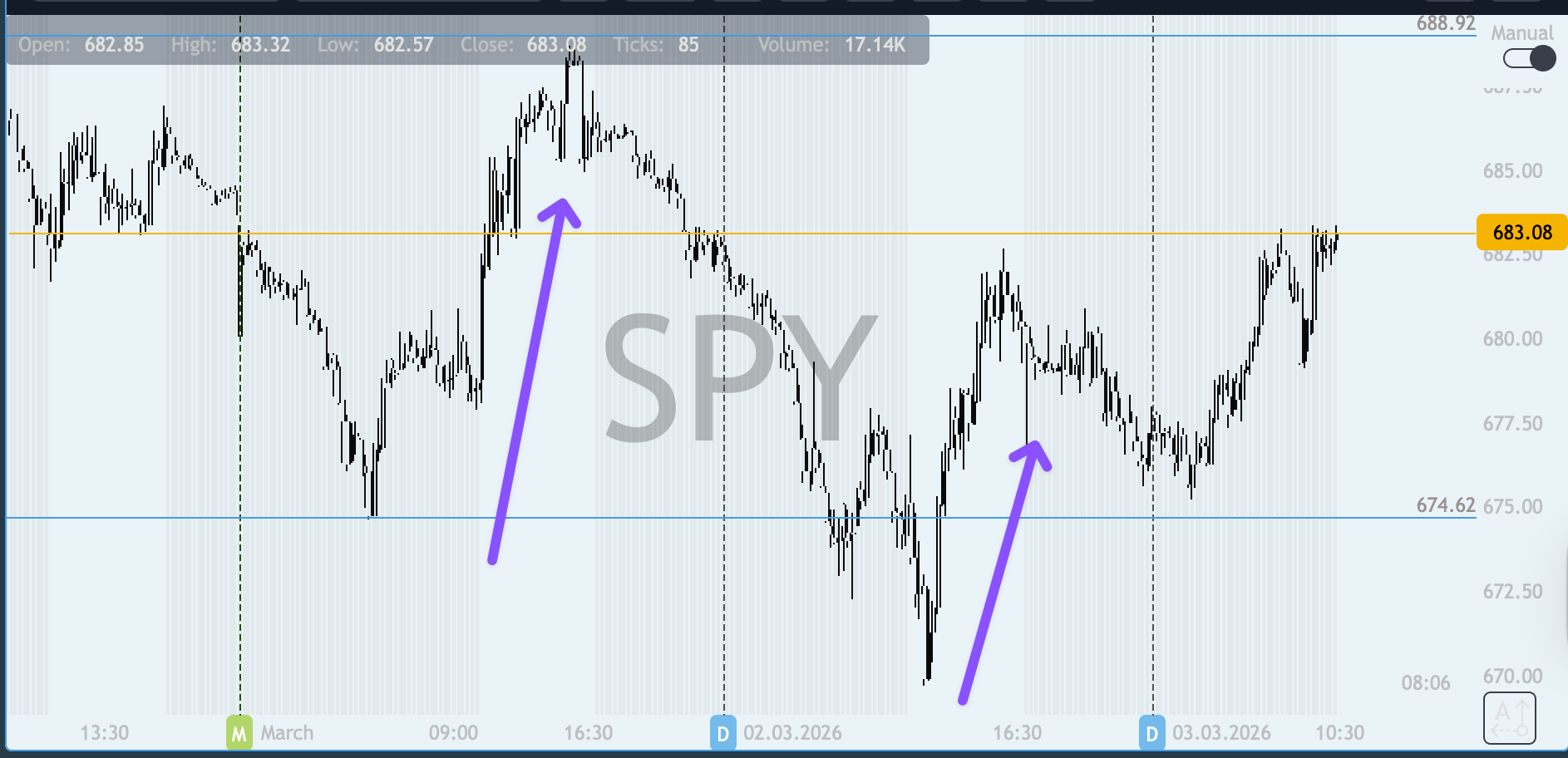
We’ve seen back-to-back gap downs on overnight geopolitical headlines… followed by steady buying pressure through the day. If you only look at close-to-close returns, you’d miss the actual story. The tell isn’t just where we closed. The tell is what happened from the open onward.
Here’s what’s going on under the hood.
Retail and short-term traders tend to react fast. They wake up, see the headline, fire market orders, trigger stop losses, and pile into the opening chaos. That creates wild opening ranges: a lot of forced selling, a lot of forced buying, and a lot of emotional decisions happening in the first 15 to 60 minutes.
Institutions don’t operate like that. If you’re buying or selling millions of shares, you can’t just slam the open without moving the price against yourself. Execution desks have one job: accumulate or distribute without being detected. That’s why large orders are sliced up and sprayed throughout the day in random sizes and timing. Many firms even sit out the open on purpose, let the volatility burn off, then turn on the buying or selling programs when liquidity stabilizes.
That’s why these gap-downs getting bought is actually encouraging. It suggests that once the market calms down enough for institutional algorithms to work efficiently, they’re stepping in and absorbing supply.
A perfect example: IWM closed down around 1.7% on the day, but intraday it was almost down 4% before rallying for hours. The close said “red day.” The tape said “buyers showed up.”
Takeaway for discretionary traders: stop letting the open bully you. The open is where emotions and forced orders collide. The close is where big money has had time to express a real opinion. If you want to act more like a pro, make fewer decisions in the first hour and more decisions closer to the end of the day, after you’ve seen whether the dip actually got bought.
Systems guys will keep following the rules. But for everyone else: track open-to-close behavior, not just close-to-close headlines. Quant beats vibes.
CTA: If you want rule-based swing, day trading, and investing systems with weekly plans and levels, check out www.statsedgetrading.com.