

If your heart rate spiked today, that’s human. Big red candles feel like the market is “broken.” It isn’t. This is exactly when a written plan beats adrenaline. At StatsEdge we don’t predict—we execute rules we drafted when we were calm.
Quick definition so we don’t fool ourselves: I don’t label “big” by % change. A –3% day is ordinary in a noisy regime and a true outlier in a quiet one. Percent moves overweight high-volatility tapes. I use ATR to normalize the move to recent range so we’re studying shocks, not headlines
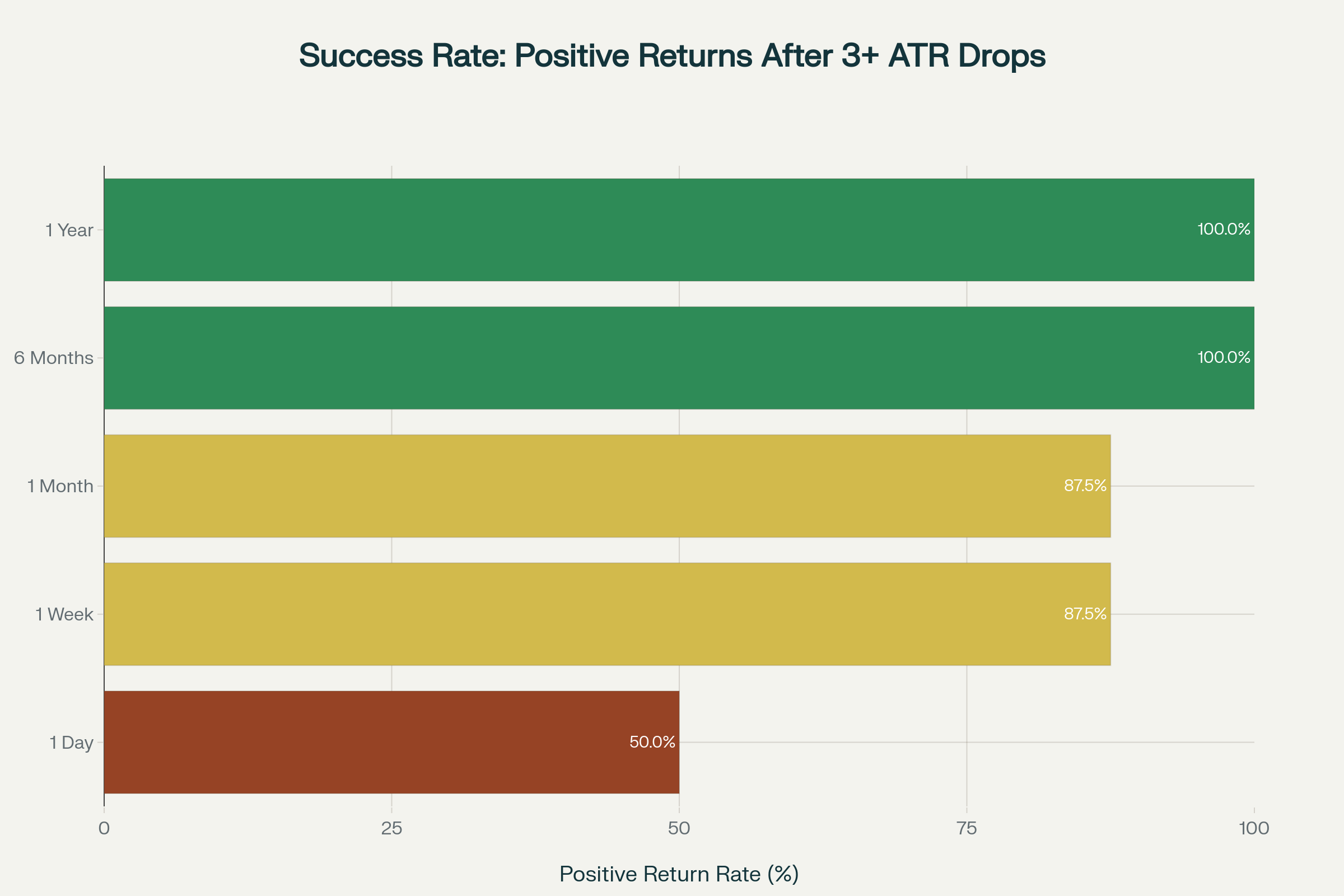
What the data says after 3+ ATR down days in SPY (2015–2025):
Tomorrow ≈ coin flip. Mean next-day return ~0.02%, 50% positive. Translation: acting on panic is mostly regret.
1–4 weeks: odds tilt up. Mean +1.21% (1W) and +2.70% (1M) with ~87.5% positive rates.
6–12 months: constructive. Mean +9.98% (6M) and +19.15% (1Y) with 100% positives in this sample.
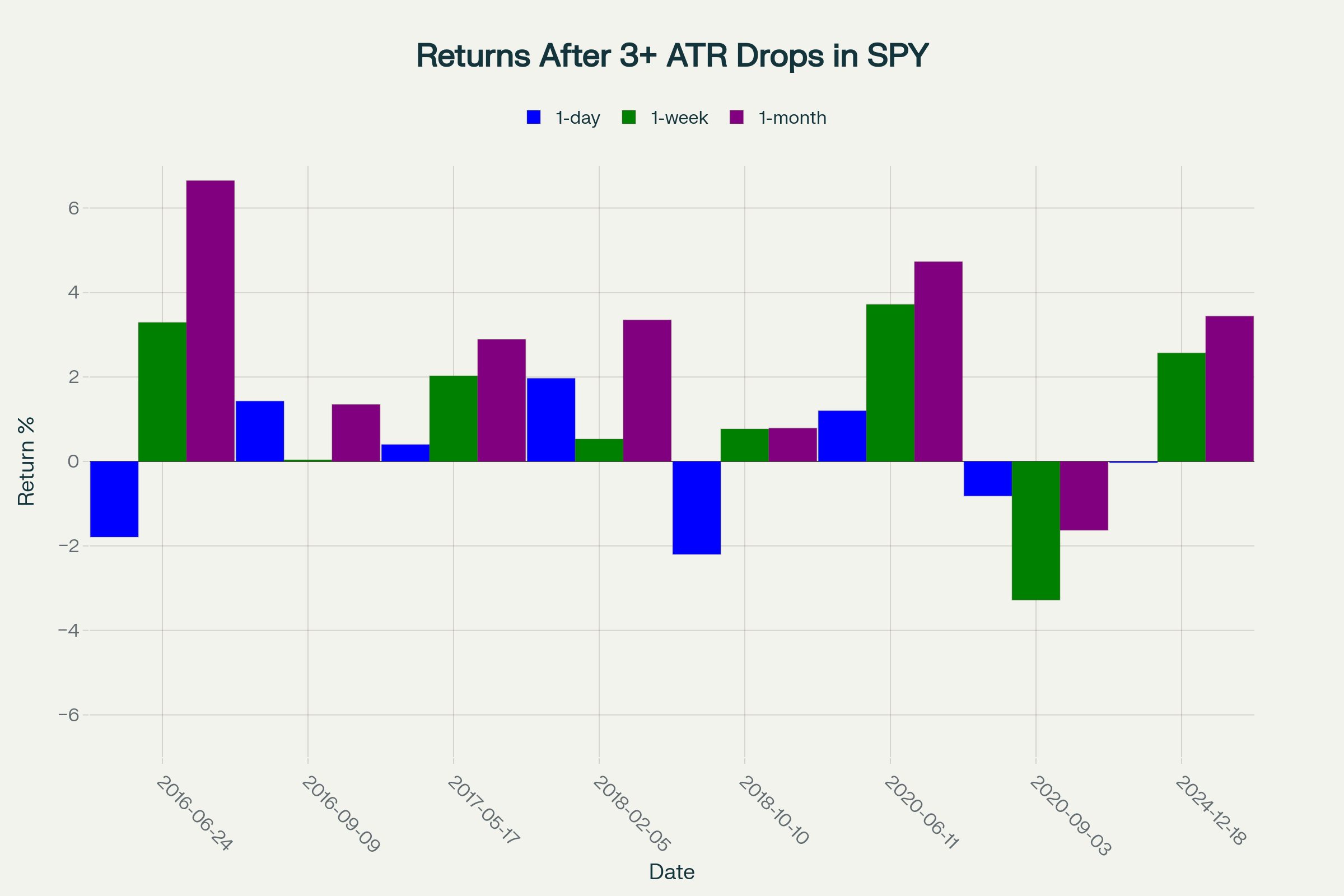
That dispersion view matters: some shocks bounce immediately; others chop or push lower before recovering. You don’t need to guess which path we’re on—you need a plan that works across paths.
After-Shock Checklist — How our process handles moves
Weekly swing plans are the anchor.
Members get a weekend email with a curated swing list and built-in trading plans—entries, exits, and risk laid out—so we already know what we’re looking to buy/sell into the new week. That’s the calm in the storm.Mean-reversion/pullback rules stay mechanical.
We look for names in longer-term uptrends that pulled back hard; entries are pre-set with stops, we don’t chase, and we use a time stop (~one week) so we’re not improvising inside the volatility cluster.Day trading = rules, not revenge.
Intraday systems are fully systematic and idea-based each morning; we let the predefined setups trigger and we’re flat by the close. No “make it back” trades just because the tape is wild.Investing sleeve zooms out.
Monthly models use momentum/relative strength and portfolio allocation to keep decisions higher-timeframe and less reactive to single-day shocks.Combine, don’t over-concentrate.
We run multiple algos that complement one another so one style can work while another rests—smoothing the equity curve when volatility clusters.
That’s the point: process before prediction. ATR tells us we had a shock; the rules tell us what we do about it.
Heads-Up: StatsEdgePro members get their full, ready-to-execute trading plans tomorrow—the weekly swing list with entries/exits, plus the rules we’ll lean on after this flush. Join now so you don’t miss it.
Big down days aren’t a personality test; they’re a systems check. Measure the move in ATRs, let the signals do the talking, and give the statistics a little time to work. Stick to your plan—or use ours until you’ve built your own.
Past performance ≠ future results.