

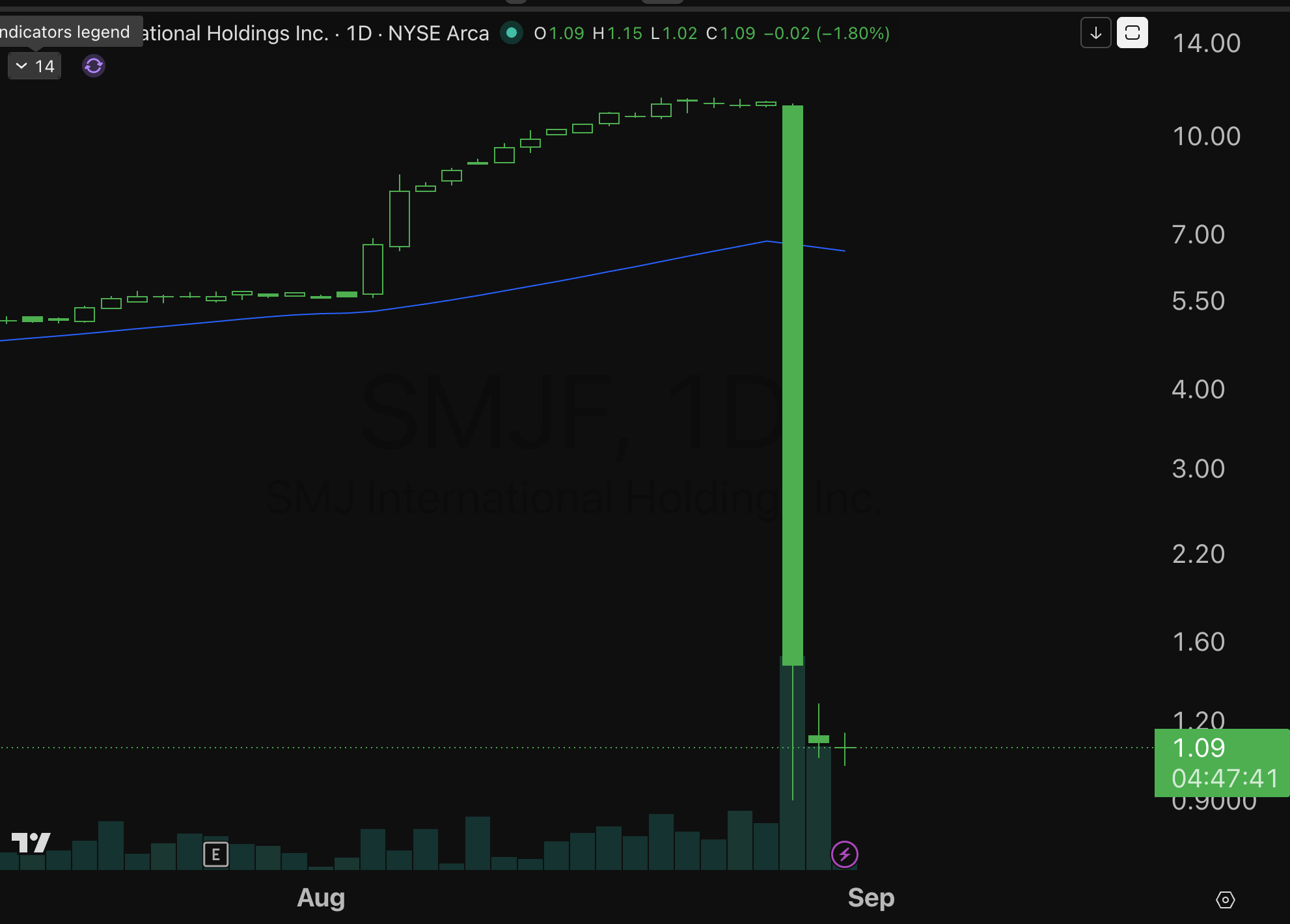
We were long a small overseas name on a bull flag. Entered around 8.70. Stopped out at 10:15 for roughly a 20% gain.
Then the stock halted and reopened around a dollar.
On the trade log, that’s a winner. In reality it was a near miss, and the difference between those two things is worth a video.
Why a winner can be a warning
Our stop happened to sit where it sat. Slightly lower and we’d have been holding through the halt.
It wouldn’t have been ruinous. Position sizing is roughly 5% of the account, so a total loss is a 5% hit. Survivable, and part of trading.
But being saved by where a stop happened to be is luck, not design. That’s the moment to look at the system rather than the trade.
The wrong fix
The tempting move is to start manually excluding companies. No tiny overseas names, nothing under some market cap.
Now you’re deciding case by case what counts as too small and which countries you don’t like. You’ve imported discretionary bias into a systematic process, and every future trade inherits it.
The smallest change that works
Require Russell 3000 membership. That’s most of the tradable universe, and it quietly excludes names hovering near the pink sheets or that began existing last month.
One filter. No judgement calls.
What it cost, and what it bought
Across 26 years, about one percentage point of annual return. Gone.
In exchange: drawdown improved, worst year improved, and profitable months went from 69% to 75%.
I’ll take that every time. Which is also the argument against the other side of the filter, because it removes the occasional 10x low-float name too. I’d rather miss those than hold one through a halt.
One more thing
People assume systematic means no decisions. It doesn’t. It means different decisions. Not what to buy today, that’s handled. Decisions like this one.
Stats Edge Pro. $149.99 a month, 30-day money-back guarantee.