

The Nasdaq is down about 5% from its highs. The SPY is down less than 1%. And the equal-weighted S&P, the average large cap stock, just made a new all-time high.
So this is rotation, not collapse. But the positioning is the interesting part.
The crowd is on one side
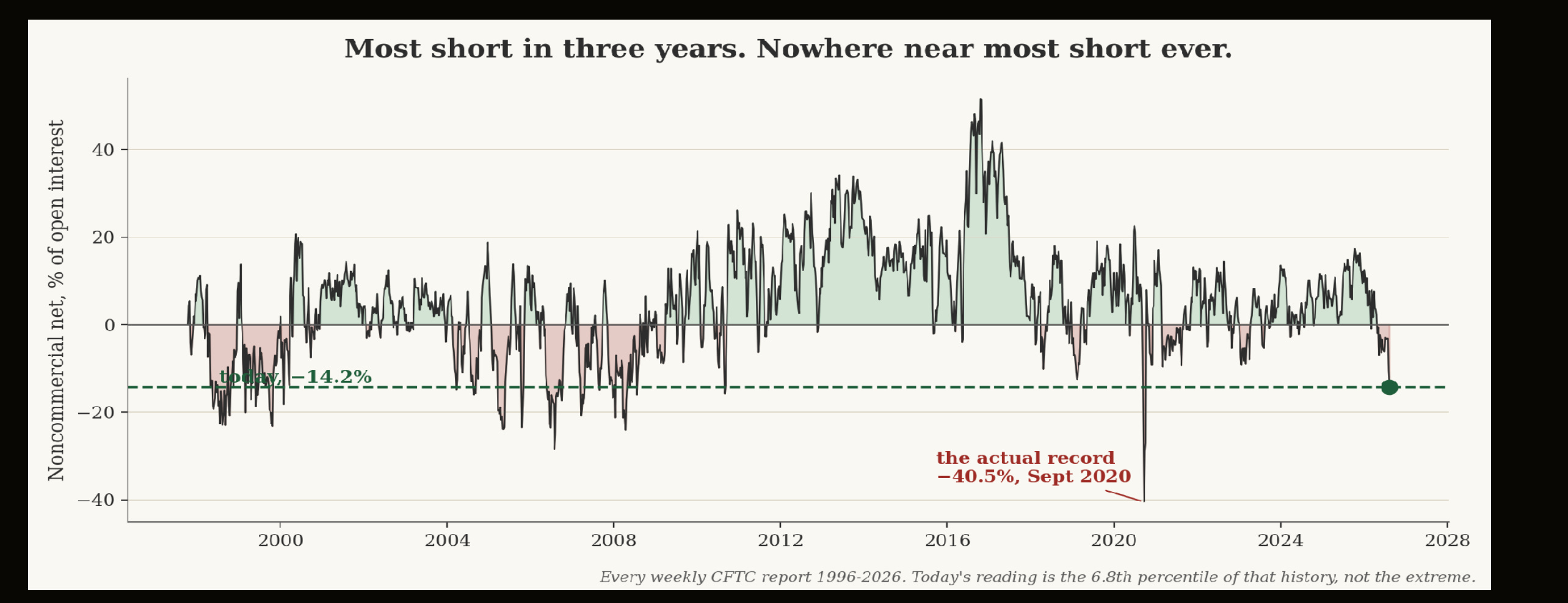
Commitment of traders data shows speculators are the most short the Nasdaq has been in three years. Strip out the 2020 outlier and you’re at levels last seen in the 2000s.
One detail worth noticing: the short build came mostly from longs leaving, not from aggressive new short selling. People took profits on the way up. That produces a net short reading without anyone hammering the short side.
Why that can be a floor
If almost everyone is short and the market keeps falling, those traders are winning. Winners take profits. Taking profits on a short means buying.
And if the tape turns, they don’t have a choice. A crowded short has to buy.
That’s the whole thesis. Not that the market must rally, but that the marginal buyer already exists.
The honest version of the backtest
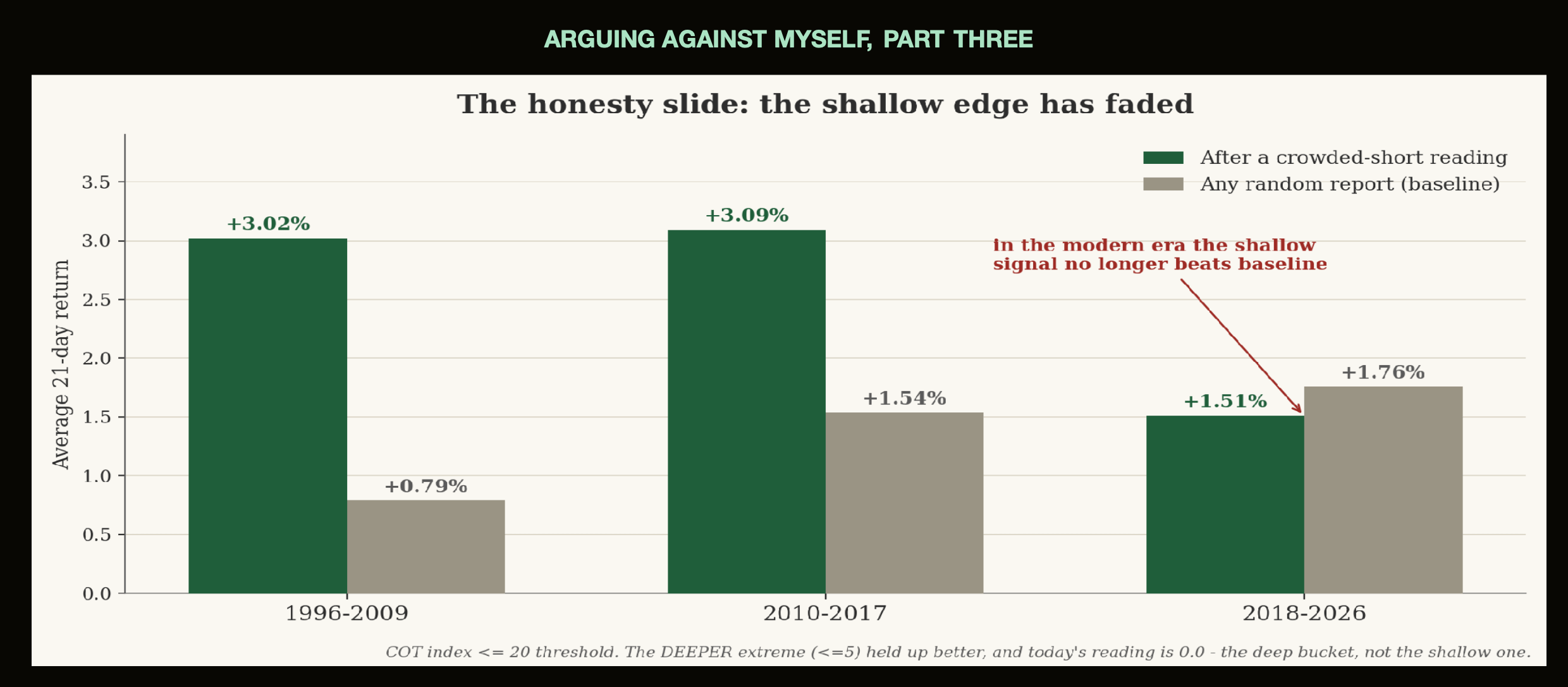
Buying the Nasdaq when positioning is crowded short and a bullish catalyst fires, a failed breakdown or a wide-range engulfing bar, underperforms buy and hold.
But it’s only in the market about 9% of the time, and it sat out all of 2000 and all of 2008.
That’s not a system you’d trade alone. It’s a component. When it does nothing, the other systems are working, and it shows up in the years that hurt everything else.
What I’m actually doing
Waiting. I want to see the igniting move before I add.
That’s Stats Edge Pro. $149.99 a month, 30-day money-back guarantee.